One of my favorite preachers is Matt Chandler. Matt is a young man who is Senior Pastor of a mega church north of Dallas. The Village Church has grown wildly since Matt became pastor in April of 2002. Each Sunday he preaches to thousands.
What I love about Matt is his absolute resolve to stay Christ/gospel centered. And, because he faithfully does that he regularly tells his affluent congregants that he believes most of them are lost (they appear to love him anyway..). Why would a pastor tell his people that?
Most of them (the members of the Village Church) grew up in homes that were considered “Christian homes” and moms and dads were members of the local Baptist church just like their parents and grand parents. What Matt Chandler knows is that many 30 somethings feel secure in their standing with God based on their family history, church attendance and membership, and good clean living, none of which qualifies one for eternal life or heaven.
So, Matt continually pounds the gospel into those good, moral church members and many of them are in fact being born again. Is there a slight possibility that in your church or mine there could be some faithful members who are leaning heavily upon church tradition, family history, and morality to get them to heaven? The answer seems obvious to me.
There is no doubt. In our fellowship, (churches of Christ), people routinely will refer to an acquaintance or family member with the qualifier “he is a member of the church”. Or, they might ask of someone they don’t know well, “has he been baptized?” Of course we expect that sincere Christian believers will be members of a church and will have been baptized. What we must know and admit is that neither is a substitute for having an ongoing, personal, trust in Jesus Christ.
I have always been struck by how gospel focused the Apostle Paul was. Remember in Romans chapter 2 he told the Christians at Rome that he desired to preach the gospel to them? It seems odd at first glance because he said of them:
First, I thank my God through Jesus Christ for all of you, because your faith is proclaimed in all the world. Romans 1:8
Wow! What exemplary Christians! They were known all around the world for their faith. But even to these wonderful Christians Paul said:
I have often intended to come to you (but thus far have been prevented), in order that I may reap some harvest among you as well as among the rest of the Gentiles. 14 I am under obligation both to Greeks and to barbarians, both to the wise and to the foolish. 15 So I am eager to preach the gospel to you also who are in Rome. Romans 1:13-15
The great Apostle was keenly aware of his obligation to preach Christ to everyone (Greeks, barbarians, etc.) but he also intended to preach the gospel of Jesus to these fine Christians too. Why Paul? Why do you want to preach the gospel, preach evangelistic sermons to Christians? I think there are at least two very good reasons why.
Christians need the gospel message to sustain and encourage them.
Many of you who read this is not old enough to remember the deeper life movement of the 1970’s. Preachers were all the buzz if they were deeper life preachers. And those with English, Scottish, or Irish accents were the most popular. Somehow it was assumed (and still is) that people with those accents are much more intelligent than say American southerners. It was expected that these men could lead people to a deeper walk with God. Well, it was yet another Christian hula hoop, a fad that came and went.
There is nothing deeper than what Christ accomplished for ungodly sinners by his life and death and resurrection. Christians who want to please God and have a close walk with him must never be far from the simple gospel of Christ. The good news about the worth and work of Jesus must be a constant theme in our own personal study and our preachers and teachers need to preach the gospel all the time. It is knowing the gospel story that instills hope, makes joy fill the heart, and gives compassion for others. There is nothing more important!
There are likely some members of almost every church who are lost.
Paul told the Roman Christians that he desired “to reap a harvest among them“. Some people are offended by such an idea. But, Jesus taught about weeds growing among the wheat (Matthew 13:24-30). And, about people who do all sorts of good things that he will declare has never known (Matthew 7:22-23) and they will be condemned. I can’t think of a more sad end than for a person to be a member of a church and attend for years, teach classes and do all sorts of good things, and in the end be rejected by Jesus because he was not a true Christian.
So it is imperative that we preach the good news both to those in the church and out of the church, to the down and out and the up and out because everyone needs the gospel and no one can be finally saved who is not actively trusting Christ the best they can. God doesn’t grade on the curve. A person is either in God’s family or out, there is no in between.
Some years ago I became friends with a woman who had been raised in church. From the time she could remember there were few Sundays when she didn’t go to Sunday school and church. She was taught to live a moral life, to be kind, to give to those less fortunate, etc. As I got to know her better it became clear to me that she was not a Christian. After our bowling league we would have a sandwich each week at a local McDonald’s. I started teaching her about what Christ accomplished for sinners and how God loves sinners so much that Jesus died in our place, for our sins, so we could be made righteous in his sight based wholly upon his worth and work. After perhaps two or three months of our weekly talks she walked up to me one day with a broad smile saying that she had trusted Christ as her Savior and on the next Sunday she would be baptized and wanted me to be there.
This church member had no inkling of an idea she was headed for destruction. She thought she had done and was doing all the right things. She lived a very good life. It was only after understanding the gospel, (something by her own admission they never taught in her church) that she repented and turned her heart toward Christ and started living for him.
The mission field is closer than you think. As God opens doors and gives opportunity we must be faithful to teach people the very good news about Jesus and his work for ungodly sinners. Those who need him are everywhere, even in our churches.
Royce
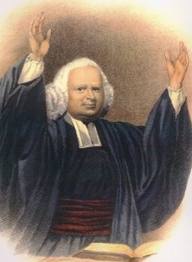 remembered by everyone who has even a slight interest in preachers and the spread of Christianity in the United States in the early years of the country.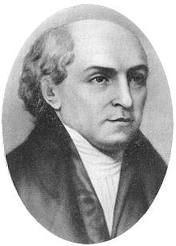

 Grace Digest